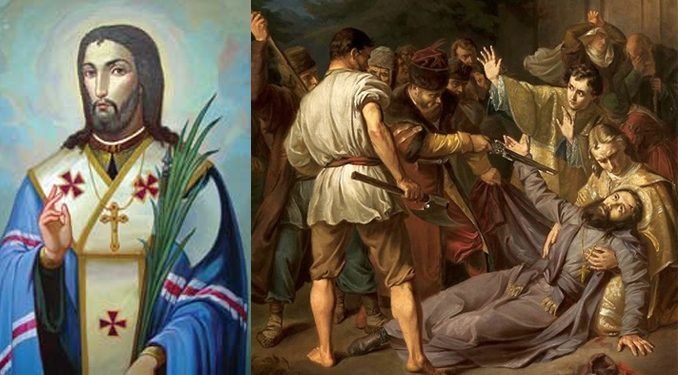
Thursday. November 12, 2026. Saint Josaphat. Josaphat Kuntsevych (1580-1623), baptized Ivan, was born into a family of burghers in Volodymyr-Volynskyi. His father wanted him to become a merchant, so he sent him to Vilna to learn the merchant business; there he became familiar with the topic of the Union. In 1604 he took the Basilian habit and the monastic name Josaphat. Five years later, after completing his studies, he was ordained.
Since childhood, he was characterized by a great love for worship, which became a source of spiritual comfort and knowledge of the faith for him, in the actual absence of catechesis in those days in what is now Ukraine and Belarus. Already in Vilno, working for the merchant Popovych, he served at the Liturgy. When he became a monk at the Monastery of the Holy Trinity, he never missed a Mass, and when he became an archimandrite in 1614, he was the first to wake his brothers to prayer, the first to go to the church, ring the bell for Matins, read the Psalms, and sing. Both monks and laity were equally impressed by this zeal of the pastor, and later testified to this during the beatification process.
He knew only the spoken languages of his surroundings (Russian and Polish), did not know Latin, but devoted all possible time to spiritual readings: he read and listened, according to the monastic rule, to the works of the Church Fathers, Prologues, Chetya-Minei (Old Russian for “monthly readings”), and other literature in the Slavic language that was common at the time. Josaphat joined the Union at a time when only one parish in the whole of Vilna accepted this decision of the pastors. If he, who was so fond of the magnificent Eastern worship and never missed an opportunity for solemn prayer, went to that small church with almost no parishioners, he was obviously confident in the truth of the matter.
The books he read answer where his certainty came from. In the letters and works of Slavic authors (in particular, in the “Word” of Metropolitan Gregory Tsamblak of Kyiv), Josaphat saw that the idea of Christians returning to their original unity under the leadership of Rome had long existed. Therefore, the proclamation of the Union was the next step in the development of this cause, not a deviation from tradition. Accordingly, his preaching of the Union was so successful because he thoroughly knew the religious literature of his time and operated with the same concepts as his interlocutors. His language was not alien to them, and the arguments he gave from the same authorities that everyone knew convinced people that the Union was the right thing to do.
At the age of 38, Josaphat had already become Archbishop of Polotsk. He preached what he was sure of, and in addition, he confirmed the truth of what he preached with his own life. And it is not only about the personal modesty and asceticism of the archbishop, but also about the real testimony of life in the Eastern tradition. Many Christians in the Uniate lands were actually afraid to accept unity with Rome not because of doctrinal differences, but out of fear of losing the traditions and customs in which they grew up. Seeing in the life, prayers, and worship of St. Josaphat that the Union did not mean Latinization, Eastern Christians were relieved to come to this Church. (Maridol: My Morning Prayer)
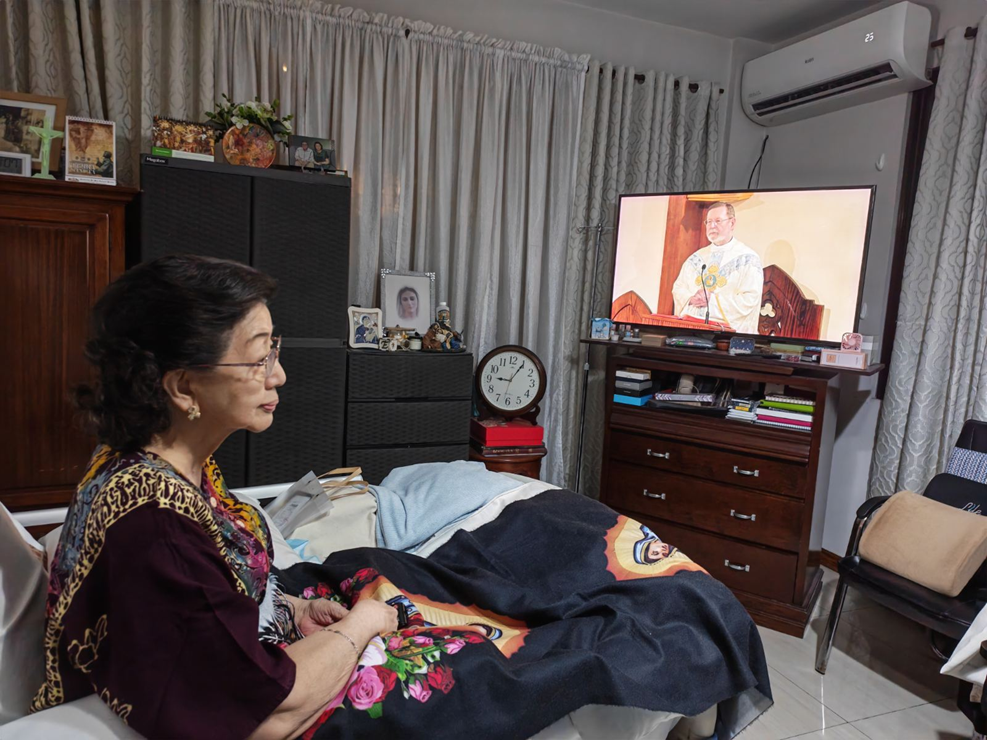
WORD Today. Luke 17:20-25. Asked by the Pharisees when the Kingdom of God would come,
Jesus said in reply, “The coming of the Kingdom of God cannot be observed, and no one will announce, ‘Look, here it is,’ or, ‘There it is.’ For behold, the Kingdom of God is among you.”
Then he said to his disciples, “The days will come when you will long to see one of the days of the Son of Man, but you will not see it. There will be those who will say to you, ‘Look, there he is,’ or ‘Look, here he is.’ Do not go off, do not run in pursuit. For just as lightning flashes and lights up the sky from one side to the other, so will the Son of Man be in his day. But first he must suffer greatly and be rejected by this generation.”
Reflection. The words of the Popes. The Lord never says that the Kingdom of God is a spectacle. Of course, “it is a celebration, but it’s different! It’s a beautiful celebration, a grand feast. And Heaven will be a feast, but not a spectacle”. Instead, “our human weakness prefers a spectacle.”
As opposed to a spectacle, there is “the perseverance of so many Christians carrying the family forward: men, women who care for their children, take care of grandparents, who have only 50 cents in their pocket by month’s end, but they pray”. And the Kingdom of God “is there, hidden in that holiness of daily life, that everyday holiness”. Because “the Kingdom of God is not far from us, it’s close”.
The very “closeness is one of the characteristics” of the Kingdom. It is an “everyday” closeness. The Kingdom of God is humble, like a seed: humble; but it becomes big by the power of the Holy Spirit. And we have to “let it grow within us, without boasting. May the Spirit come, change our soul and lead us forth in silence, in peace, in quiet, in closeness to God, to others, in adoration of God, without pageantry”. (Pope Francis, Santa Marta, 13 November 2014)
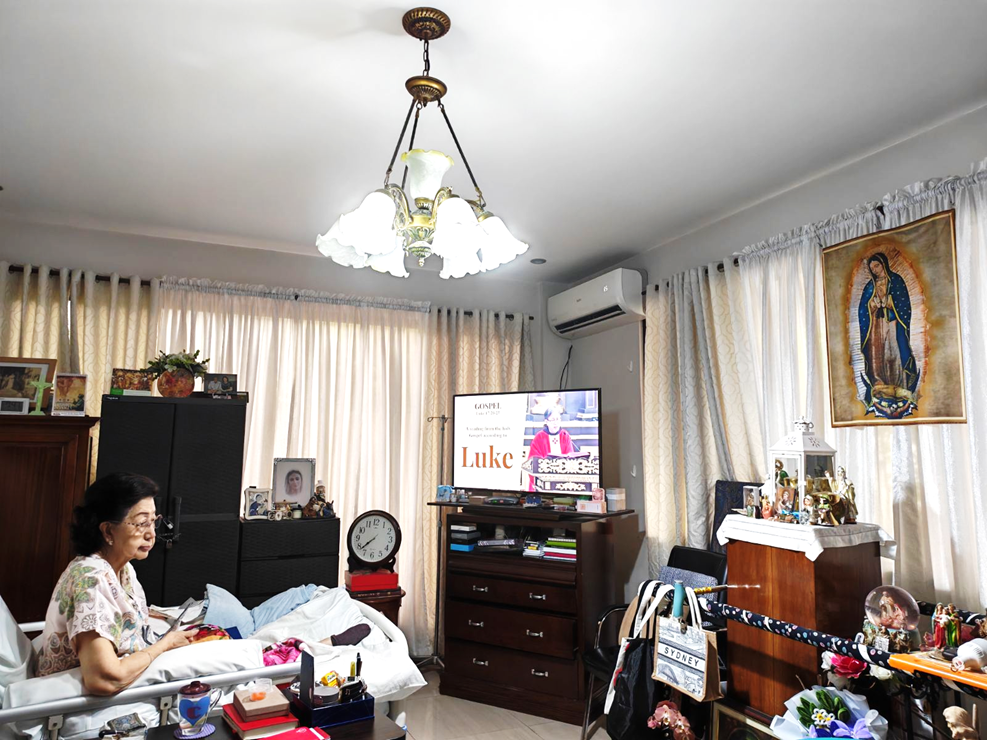
Stir up within Thy Church, we beseech Thee, O Lord, the Spirit with which blessed Josaphat, Thy Martyr and Bishop, was filled, when he laid down his life for his sheep: so that, through his intercession, we too may be moved and strengthened by the same Spirit, and may not shrink from giving our lives for our brethren. Through our Lord Jesus Christ, Thy Son, Who liveth and reigneth with Thee in the unity of the Holy Ghost, one God, world without end. Amen.


 The evil that men do lives after them; The good is oft interred with their bones. (Shakespeare)
Business Enterprises are not Legacy: the wake you leave, let the Montinola Cumagun Care Foundation’s Good Work speak, not our family name.
Our Lady of the Impossible, grace those late in life but had more in life who tried to be their brothers’ keepers for those who have less in life – “Ester and I pray for your blessings to grace our children, and their children’s children, their children’s children,, to wholeheartedly support The MONTINOLA-CUMAGUN CARE FOUNDATION OBJECTIVES: (1) Special Children SPED, “A child’s mind is the most precious thing to waste.” (The motto of the American Negro College), and the Handicapped Senior Citizens – Physical Therapy. (2) Financial Support for Diocesan priests and Grade School Teachers for the rural areas. (3) Computer Start-up Education Tools for selected public schools and (4) Selected Start-up Management and Financial Support for Small Businesses. “From everyone who has been given much, much will be demanded; and from the one who has been entrusted with much, much more will be asked.” Luke 12:48. “The sin of the rich man was not that he did wrong things, but that he did nothing.” (William Barclay, in A.G. Cumagun Autobiography Song of Myself Memoirs, Looking Back at Serendipity, 2002) Our Lady of the Impossible, “Remember, O most gracious Virgin Mary, that never was it known that anyone who fled to thy protection was left unaided…” Bless the Montinola Cumagun Care Foundation. Let Its Wake Speak.
Beata John Paul 1, watch over Amy Ylagan’s PT recovery, Cristina C and Justice Jun’s health, Ester’s stoma adhesion recovery, and our autistic son John Paul’s emotional stability at 57.
Mama Mary walks us through the entire Joyful, Luminous, Sorrowful, and Glorious angles of the life of our Savior when we pray with her in the Rosary.
October is the month of Our Lady of the Rosary but everyday is for us to say the Rosary. For many sinners, she and her Rosary have been the lifeline that pulled them back to Jesus.
Rosary means “garland of roses.” The family that prays together stays together. Daily Rosary trains the whole family in humility and obedience, becoming a cohesive garland of lives linked by strong faith, hope, and love for God and each other. Let us pray the Rosary with Mama Mary.
FOR THE FAITHFUL DEPARTED AND SOULS IN PURGATORY
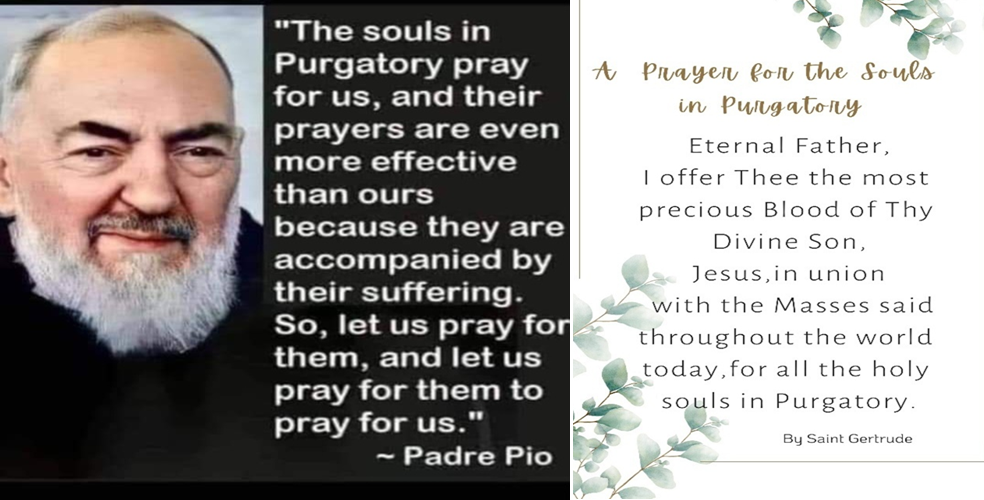 In Memory of all those who left us. We remember you in the morning and at night. You are always with us. We pray for the souls in Purgatory.
Blessed Mother Mary, I bring to you for your intercession the souls of Amb. Manuel R. and Dolores G. Cumagun, Juana Cumagun, Annette Cumagun, Lina Beltran, Judge and Mrs. Dolores Cumagun, Gov. Primo & Magdalena H. Gaffud, Dr. Trino, Sr. & Angeles Montinola, Betty, Luie, Trino, Jr. Montinola, Bernardino, and Isabel Jalandoni. Dr. Terry Lirio-Montinola, Dr. & Mrs. Tomacruz, Akira Tsusaka, Boy Eugenio, Jesus Ibañez, Sen. Nene Pimentel, Santiago Ranada 111, Patria Manuel, Dr. Mariano Laurel, Rene Datu, (Ateneo ’54 – Jimmy Ongpin, Atty. Ato Gonzales, Buddy Joaquin, Fr. Unson, Msgr. Tantoco, Atty. Art Alafriz, Robert Arevalo Ylagan, Maximo Abesamis, Jr., Jesse Paredes), Atty. C. Platon, Araceli Rivera, Col. Tanseco, Dr. E. Fores, Dr. J. Caedo, Christine Syjuco, Leni Panganiban, Raul Boncan, Atty. Spanky and Dolly Perez, Amb. Albert del Rosario, Nellie Valdez, Toti Herbosa, Tec Syjuco, AL, Umberto (Beck) Gonzales, Rufo Colayco, Dr. Rolando A. Florendo and Vicente and Martin de Villa. Pray 7 Our Father and The Credo
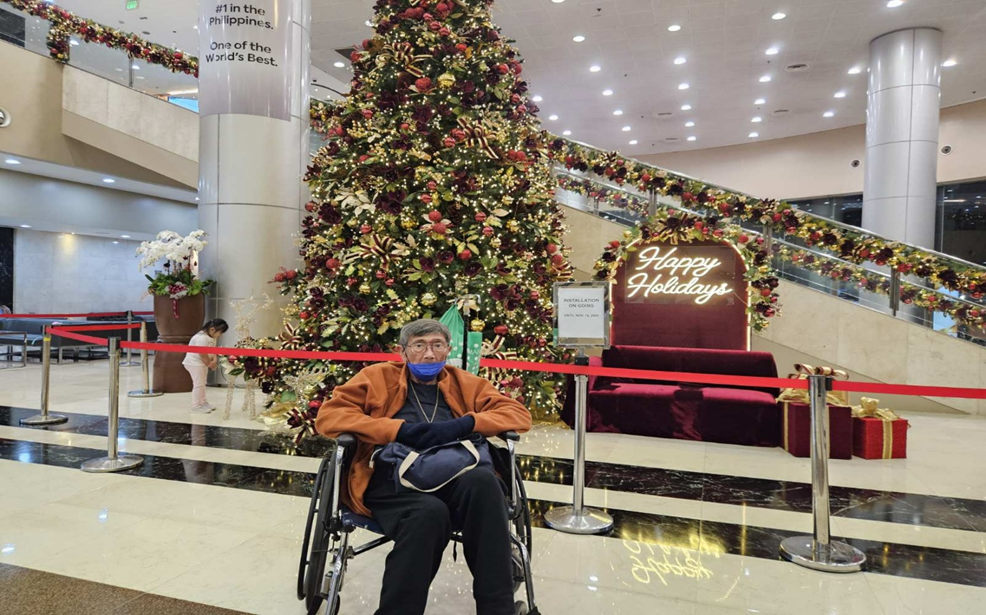 After one week confined in a hospital isolation room with medical equipment as needed brought to my room – 5 days respite at home with hospital procedures to do every 1-2 hours. Back to hospital by Friday – Pray not a barracks.